The whole tone scale is one of the most symmetrical and distinctive scales used in Western music. As its name suggests, every note in the scale is separated by a whole tone, with no half steps at all. Because of this, it produces a sound that is hazy, dreamlike, fluid, and unresolved. Unlike traditional major and minor scales, where there is a strong tonal center, the sense of tonality in the whole tone scale is weakened. This quality makes it especially appealing in impressionist music, jazz and modern compositions.
The scale consists of only six notes. This is because when you divide the twelve-note chromatic scale entirely into whole tones, you return to the starting note after six steps.
Whole tone scale pattern:
Whole – Whole – Whole – Whole – Whole – Whole
If we start from C and apply the major scale pattern (w – w – w – w – w – w), we get the following sequence of notes:

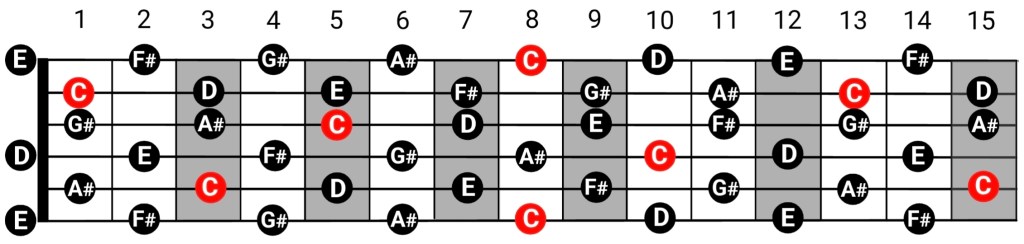

In the whole tone scale, since each note is spaced at the same interval, the sense of a tonal center is weakened. It creates a feeling of suspension, as if the music is left hanging in the air: