Notes on the Guitar
First things first, let’s start with learning where the notes are on the guitar.
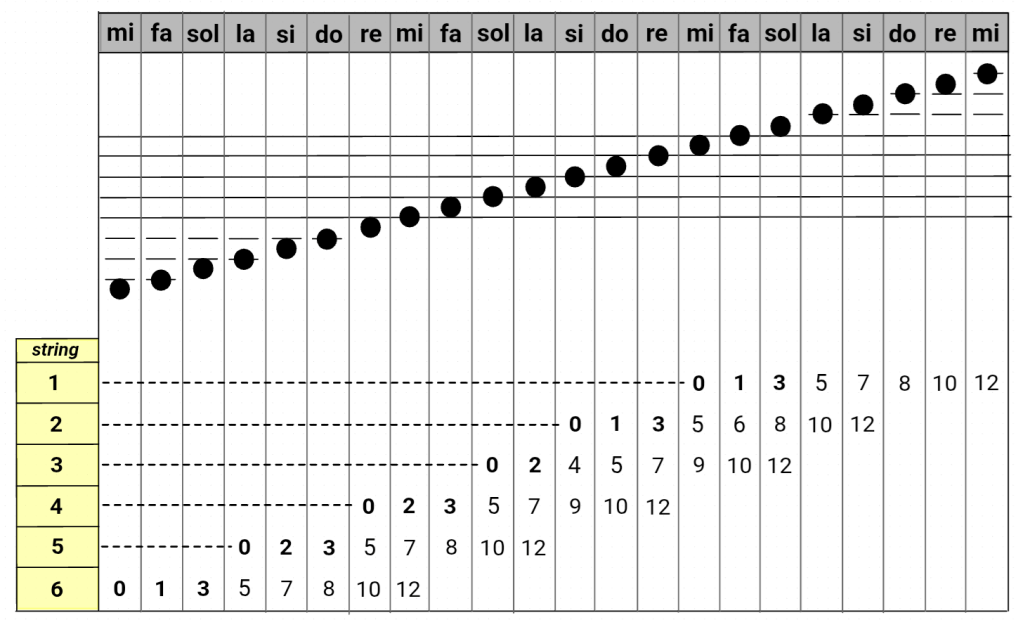
Let’s learn the locations and names of the notes on the first three frets of the six strings shown in bold. While practicing, saying the name of each note out loud as you play it will speed up your learning process.
Note Durations
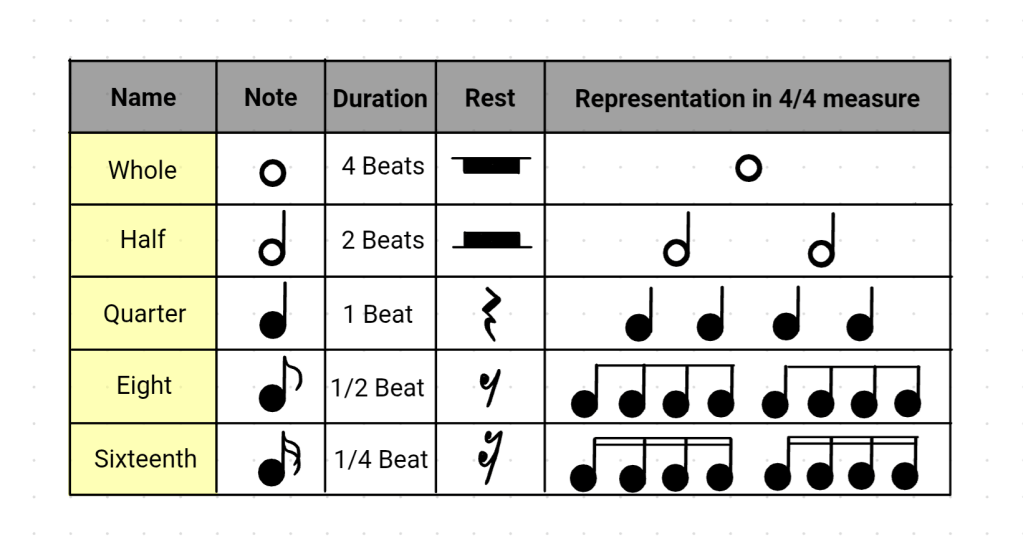
Here you can see the symbols for notes and rests according to their durations.
Symbols on the Staff
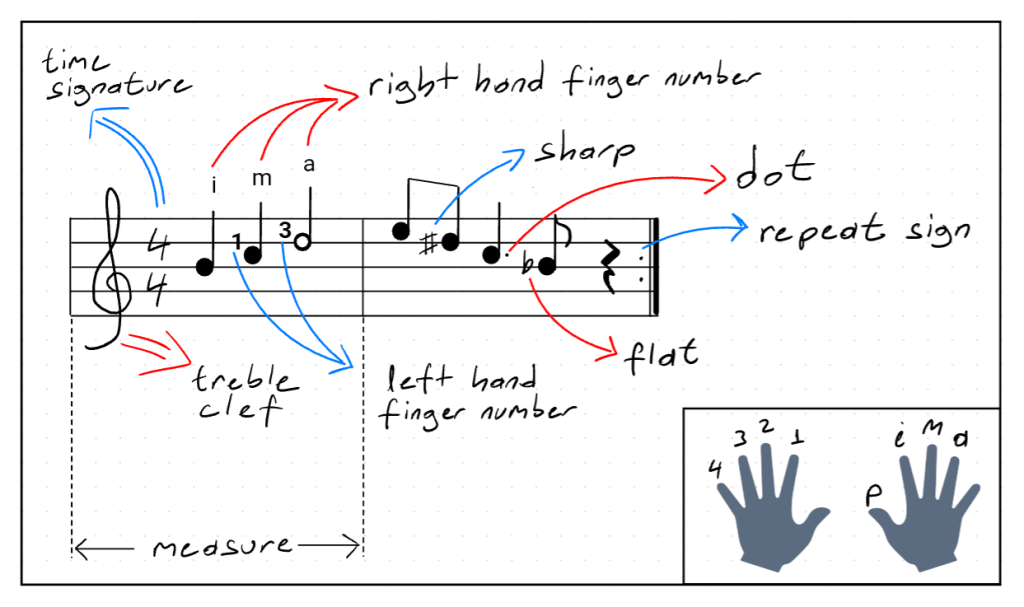
You will see these symbols frequently in the exercises and pieces:
Time Signature: Shows how many beats are in each measure and which note value gets one beat.
Top number (4): Beats per measure.
Bottom number (4): Quarter note gets one beat
Treble Clef: Indicates the pitch range used. Most guitar music is written in treble clef.
Measure (Bar): A segment of music containing a fixed number of beats, defined by the time signature.
Sharp (♯): Raises a note by one semitone (half step).
Flat (♭): Lowers a note by one semitone (half step).
Dot (Dotted Note): Increases the duration of a note by half of its original value. Dotted 1 beat note = 1.5 beats
Repeat Sign: Indicates that a section of music should be played again.
Exercises
Beginner-Level Pieces
Classical Guitar Pieces
If you have completed all the exercises and pieces above, you are now ready for polyphonic music. Before moving on to the polyphonic pieces where the true beauty of the guitar emerges, complete the arpeggio exercise below. In the right hand, we play the bass notes with the p finger and the treble notes with the i, m and a fingers:
If the arpeggio exercise is also complete, you are ready for your classical guitar journey:
