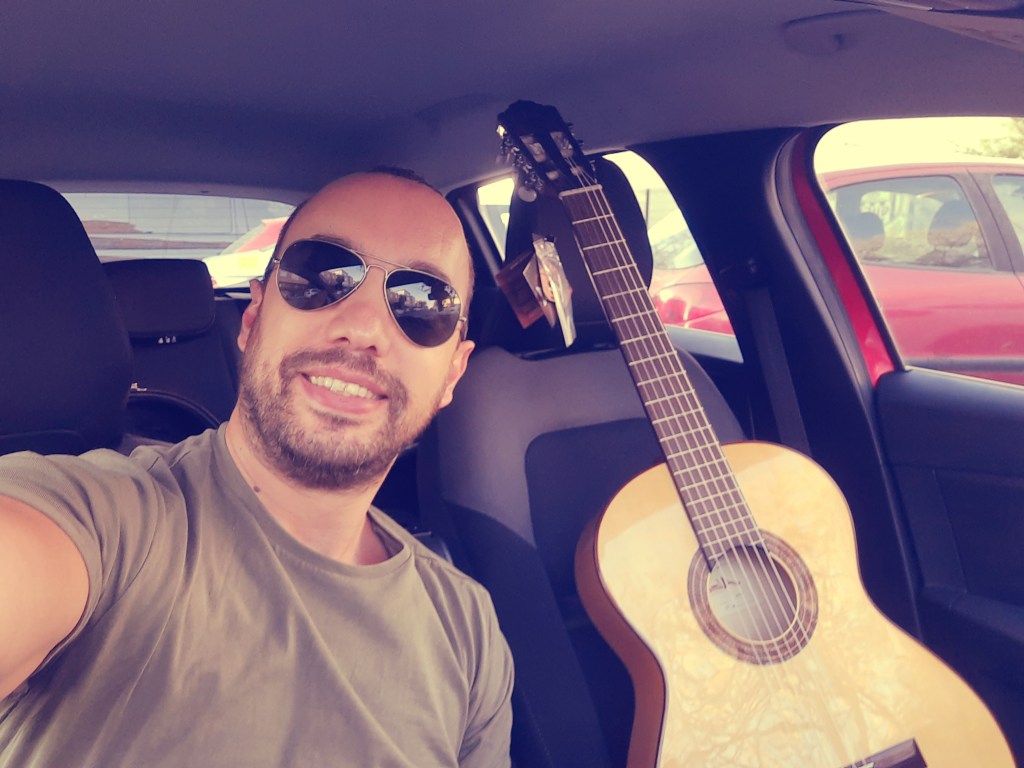
Hi, I’m Hakan.
I am a mechanical engineer. I am not a conservatory graduate or a full-time music teacher. Including the master’s degree I left during the thesis stage, I have spent many years studying engineering, and I currently work in the renewable energy sector. Alongside that, I have been teaching guitar for over fifteen years, both at private music schools and through individual online and in-person lessons.
My story with the guitar began when I was fifteen. By working with exceptional and highly skilled teachers, I had significantly developed my classical guitar repertoire as I entered university. I spent countless hours joyfully playing works by composers such as Francisco Tárrega, Andrés Segovia, Isaac Albéniz, Agustín Barrios, Heitor Villa-Lobos, Mauro Giuliani, and Fernando Sor. Later, I became interested in the electric guitar and expanded my repertoire with pieces from bands like Metallica, Deep Purple, Guns N’ Roses, and Pink Floyd. Playing guitar was never just a hobby for me; it was a way of being—and it still is.
As my professional and personal life became increasingly demanding, that ”way of being” began to waver. I remember the months when my guitar gathered dust in the corner. When I started thinking and researching how to brush off that dust, I found myself drawn to neuroscience. The books and articles I read on the subject sparked a light in my mind. I finally knew how to practice and even improve my guitar skills within limited time. As I crossed paths with students who, like me, wanted to play but struggled to integrate practice into their lives, I had the opportunity to share the techniques I had learned and see their results firsthand: no matter how busy your lifestyle is, focused and intentional practice can always bring progress.
After learning how to practice and improve on the guitar, new questions began to arise about how we actually teach it. In the engineering field, especially within the R&D department, I had spent years conducting detailed research, applying it in practice, and improving existing systems. I decided to apply that same mindset to guitar education. Once again, my research led me back to neuroscience.
One thing has become increasingly clear: When teaching, we often rely on fixed sets of information. We cover all the essential guitar techniques and musical knowledge, but I’ve come to believe that understanding the brain—the very place where all this learning happens—is just as important as learning the techniques themselves.
To truly learn to play your instrument, you need to first understand yourself.
When you do, you can start to break through mental limits you didn’t even know existed. You move toward your potential with much greater clarity and focus. That’s what happened for me, and for many of my students.
To support this approach, I share articles and exercises. You can also find guitar and exercise videos in various styles on my YouTube channel.
In the end, it’s all about the connection you create with your instrument.
