
You say, “Let’s record this part.”
You position your phone, adjust the angle.
Take a deep breath and hit the record button.
You play the part that was effortless just seconds earlier.
And then bam!
Your mind scatters, finger control slips, nerves tense up, your heart starts racing…
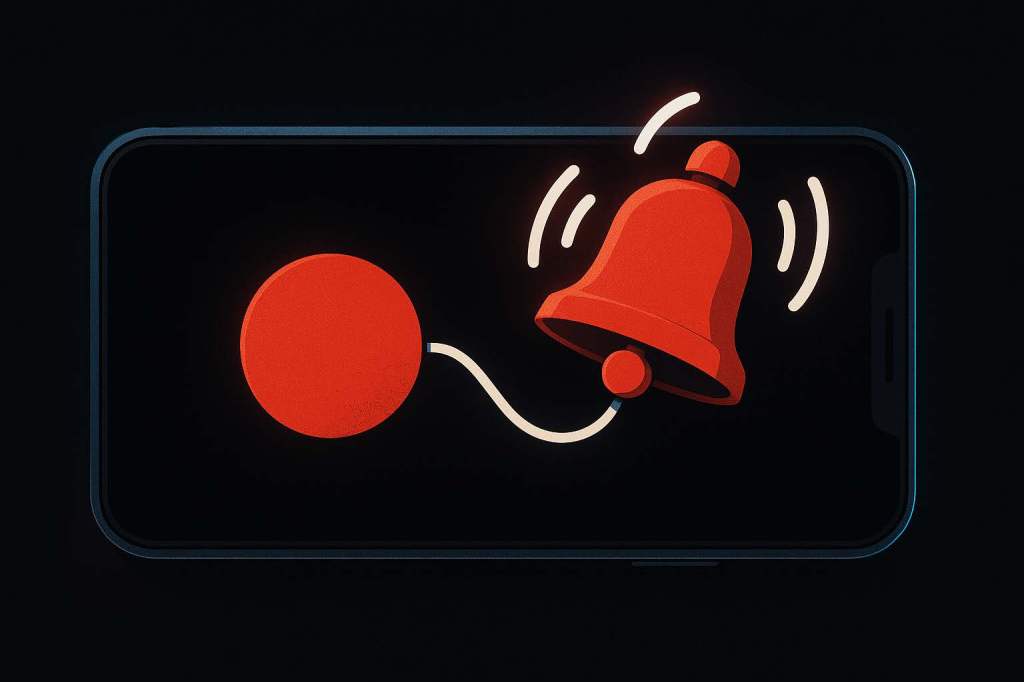
It feels as if that red button didn’t start a recording, but instead triggered your sympathetic nervous system.
And in fact, that’s exactly what it did.
But why?
——————————————–
Your Brain Is Running on Stone-Age Code

For most of human history, people lived in small groups. That’s why one of the brain’s most ancient patterns is dedicated to protecting our reputation in the eyes of the tribe. Because, at the time, survival depended on it.
In tribal life, making a mistake could lead to a chain of consequences:
- Loss of respect and trust
- Social exclusion
- Being left alone
- Risk of death
That’s why, when someone is watching us, the brain flashes a message like a breaking news alert on a TV screen.

Meanwhile, all you’re doing is playing a simple pentatonic pattern…
——————————————–
The Sympathetic and Parasympathetic Nervous Systems
Both are parts of the autonomic nervous system, which means they function independently of conscious control. Their primary role is to regulate internal organs and various bodily systems.
Sympathetic system: “fight or flight”
Parasympathetic system: “rest and digest”

These two opposing systems, whose main function is to protect us from danger and help us relax once the stress has passed, can sometimes be activated unnecessarily. This happens because of the outdated “software” we mentioned earlier. Humans, in particular, are the only species capable of triggering the sympathetic nervous system through thought alone, even while sitting completely still.
What’s fascinating is that this system can be triggered simply by pressing the record button on your phone, even if you’re sitting alone at home with your guitar in hand.
——————————————–
Can We Hack the Brain’s Ancient Code?
There are three main reasons I ask my students to send me videos during the week, between lessons:
- To help develop an objective sense of perception, rather than a purely subjective one
- To gradually reduce the activation of the sympathetic nervous system
- To catch and fix technical problems that come from the cognitive stage
Recording yourself gives you the chance to see and hear your playing from the outside, and that’s a valuable opportunity. I remember times when I thought I had played a piece perfectly, only to watch the video and realize I had completely missed the rhythm. Developing an objective perspective helps prevent you from reinforcing mistakes through repetition.
Repeated experience to a stressful situation will eventually reduce your stress response. Thanks to the brain’s neuroplasticity, the neural circuits that once triggered stress because of the outdated “software” we mentioned earlier will begin to change each time you record a video. Over time, this process will help you feel more comfortable.
Moreover, getting used to the stress caused by the feeling of being watched when you hit the record button, can also help reduce the anxiety you may feel when performing in front of an audience, or your teacher.
In other words, you can use the record button and a real audience as the same “stress” trigger to your advantage.
Hopefully, you’ll remember this during your first live performance.
Chances are, you will : )

Leave a comment